Bob Marley: History, Albums and Best Songs
Bob Marley was a Jamaican singer, songwriter and guitarist who became the most famous reggae artist in history. With his band the Wailers he blended the Jamaican rhythms of ska and rocksteady into songs about love, freedom and unity, and carried a local music to audiences on every continent. He died in 1981 at only 36, but his songs still sound across the world. This page is the plain-English guide: who he was, what he made, and where to begin.
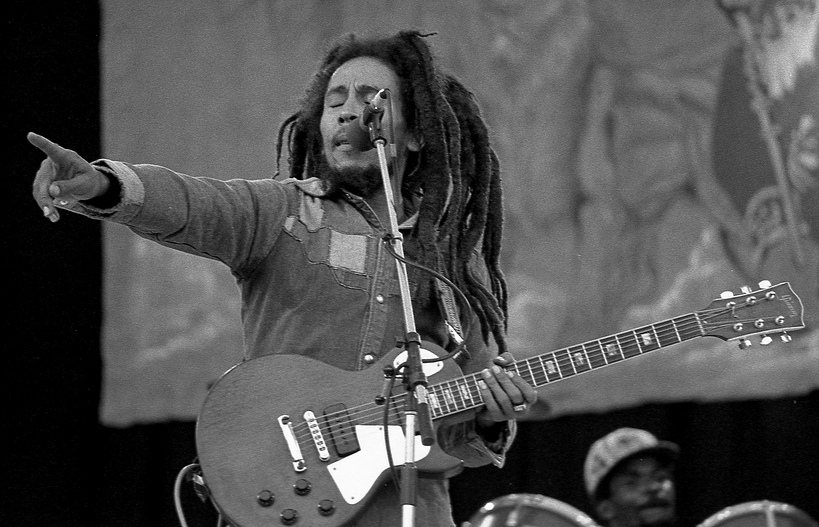
Listen to Bob Marley now
Kalisha has a dedicated Bob Marley station called Exclusively Bob Marley: one continuous channel with his songs, free to start, with nothing to install. It is one of the 312 exclusive single-artist channels in the app.
The short version
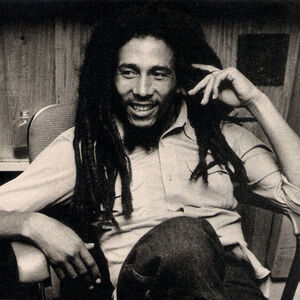
Bob Marley grew up in Kingston’s Trench Town, where he formed the Wailers in 1963 with Peter Tosh and Bunny Wailer. They had hits in Jamaica in the 1960s, then signed to Island Records in 1972 and reached the world with Catch a Fire and Burnin’ in 1973.
By the late 1970s Marley was a global star. Songs like No Woman, No Cry, Exodus, Three Little Birds and Redemption Song carried messages of peace, hope and resistance. After his death the compilation Legend became one of the best-selling albums of all time.
The story in 5 chapters
Trench Town and the first Wailers
Robert Nesta Marley was born in the village of Nine Mile in the Jamaican countryside and moved to the Kingston district of Trench Town as a teenager. There he met Neville Livingston, later known as Bunny Wailer, and Peter Tosh, and learned music with their group.
In 1963 they formed the Wailing Wailers. Their song Simmer Down became a number one in Jamaica in 1964.
Ska, rocksteady and early reggae
Through the 1960s the group worked with producers in Kingston, including Lee "Scratch" Perry, and moved from ska to the slower rocksteady and then reggae. Marley embraced the Rastafari faith, which became central to his songs.
Their early records, such as Soul Rebels (1970), made them stars in Jamaica but were hardly heard abroad.
Island Records and Natty Dread
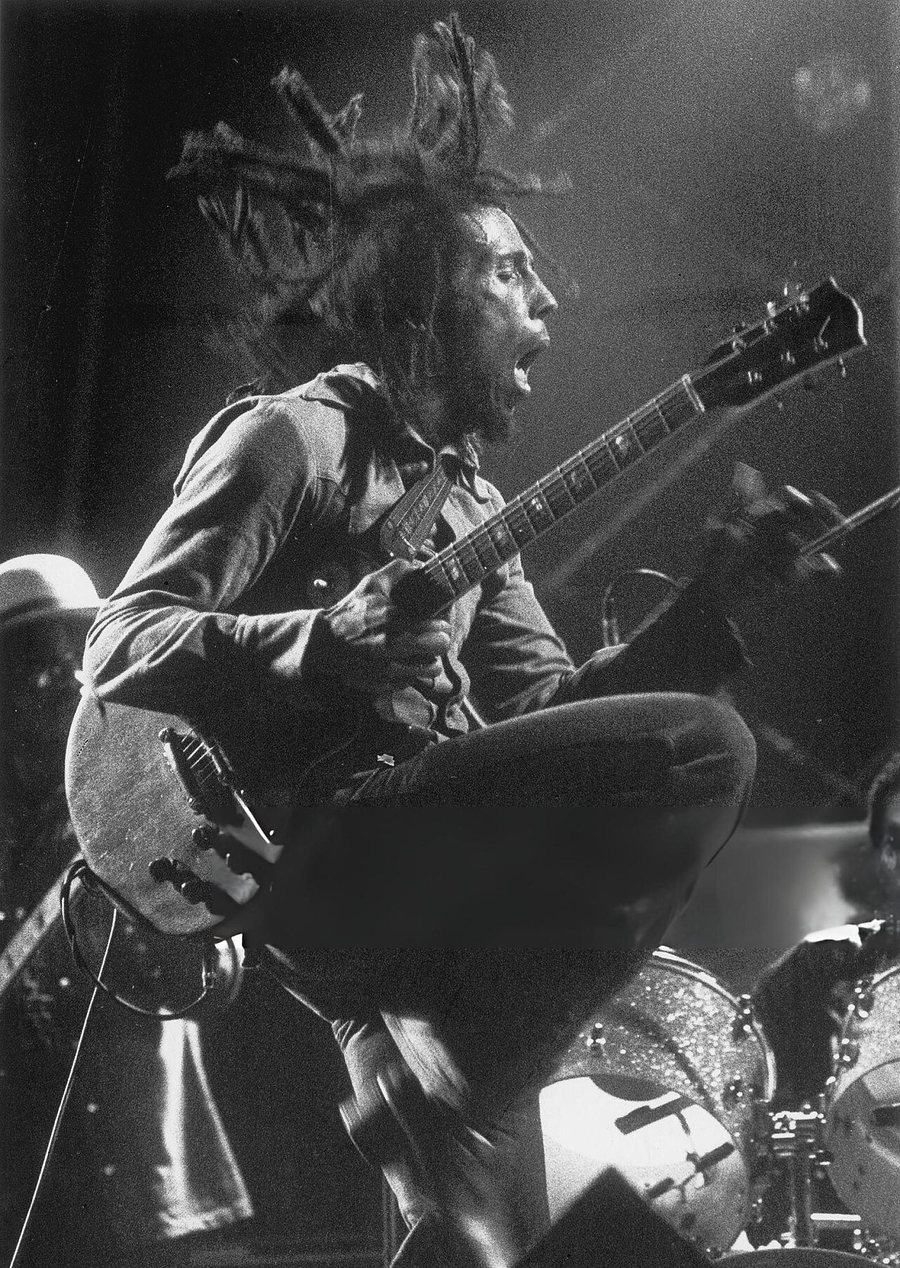
Chris Blackwell of Island Records gave the Wailers a budget to make a full album. Catch a Fire (1973) and Burnin’ (1973) introduced reggae to rock audiences, and Eric Clapton’s cover of I Shot the Sheriff in 1974 made the song a worldwide hit.
Tosh and Bunny Wailer left, and Marley continued as Bob Marley and the Wailers, with the backing singers the I Threes. Natty Dread (1974), the live Live! (1975) and Rastaman Vibration (1976) made him a star.
Peace concerts and Exodus
In December 1976 Marley was wounded in an armed attack at his home in Kingston, days before a free concert meant to calm political tension. He played the show anyway, then left for London.
There he made Exodus (1977), one of the most praised albums of its decade, and Kaya (1978). In April 1978 he returned to Jamaica for the One Love Peace Concert, where he brought two rival political leaders onto the stage to shake hands.
Survival, Uprising and the last year
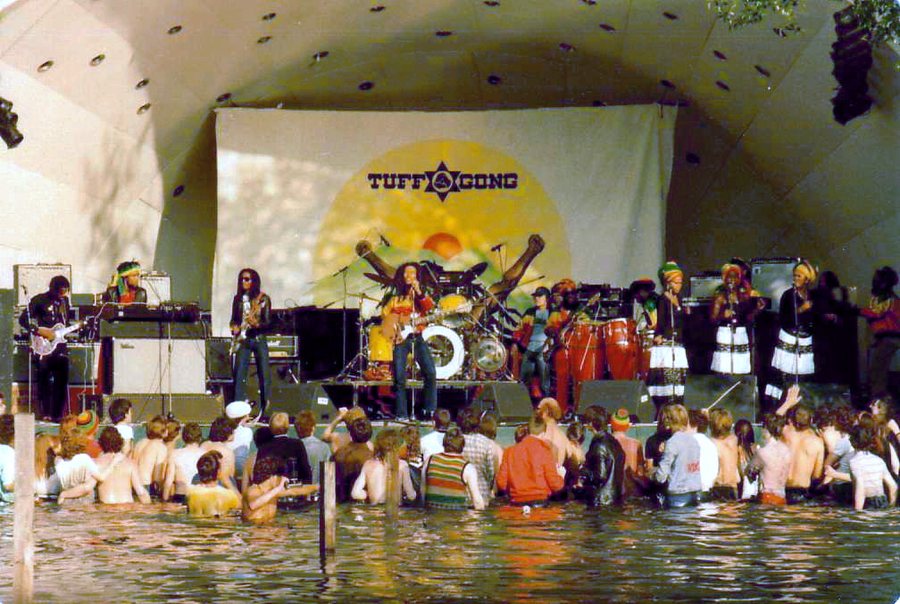
Survival (1979) was a strong political album. Uprising (1980) held Redemption Song, a quiet, acoustic ending to his career. In April 1980 he played at the independence celebration of Zimbabwe.
Marley had been ill with cancer for several years and died on 11 May 1981 in Miami. He was given a state funeral in Jamaica.
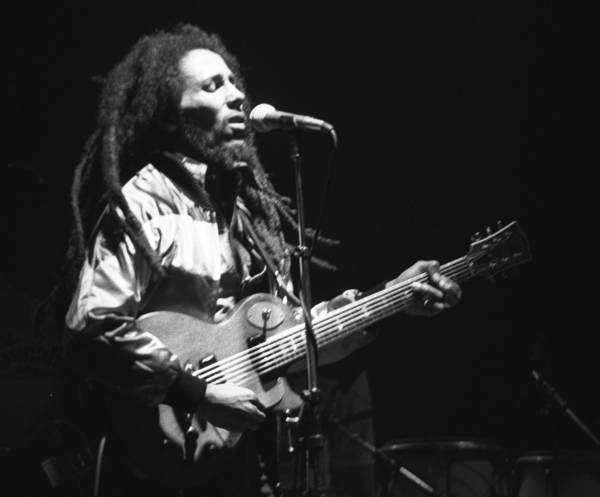
Band members
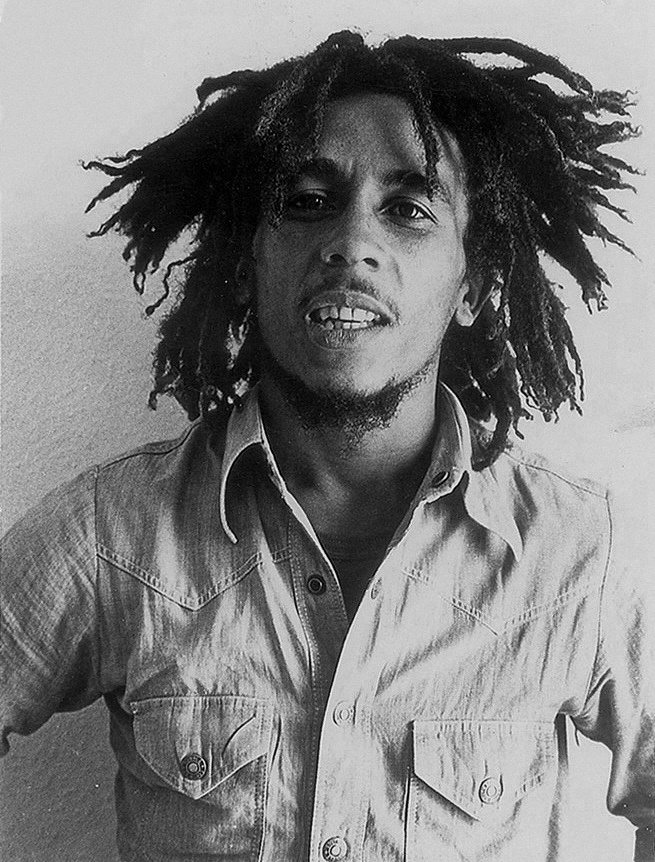 Bob Marley in a 1976 press photo. · Photo: Dennis Morris; Distributed by Island Records · public domain, Wikimedia Commons
Bob Marley
The leader and songwriter of the Wailers. His warm voice and simple, direct lyrics about love, struggle and hope made him a symbol of reggae around the world.
Peter Tosh and Bunny Wailer
Peter Tosh and Bunny Wailer sang and wrote with Marley from the start and left in 1974 to pursue solo careers, which were successful in their own right.
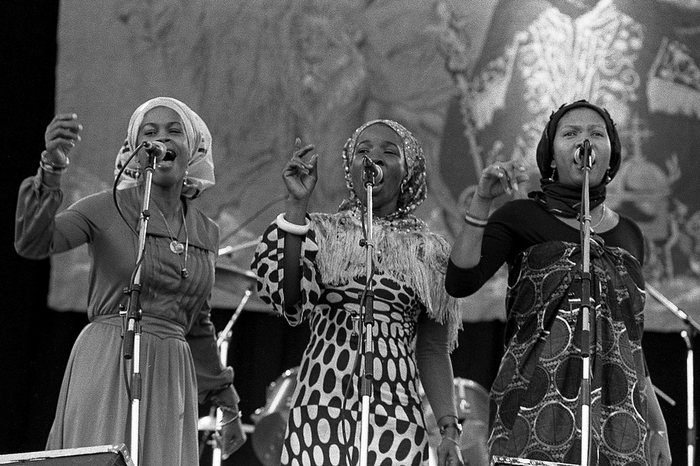 The I Threes, Marley’s backing vocalists, in 1980. · Photo: Eddie Mallin · CC BY 2.0, Wikimedia Commons
The I Threes
Rita Marley, Marcia Griffiths and Judy Mowatt, who sang with Marley on stage and on records from 1974.
The Wailers band
Brothers Aston and Carlton Barrett on bass and drums, guitarist Junior Marvin and keyboard players such as Tyrone Downie formed the tight rhythm section behind Marley’s songs.
Albums in order
| Year | Album | In a sentence |
|---|---|---|
| 1970 | Soul Rebels | An early Wailers album produced by Lee Perry. |
| 1973 | Catch a Fire | The Island Records debut that introduced reggae to the world. |
| 1973 | Burnin’ | Includes Get Up, Stand Up and I Shot the Sheriff. |
| 1974 | Natty Dread | The first album after Tosh and Bunny Wailer left, with No Woman, No Cry. |
| 1975 | Live! | A live album that made No Woman, No Cry a hit. |
| 1976 | Rastaman Vibration | A US top-ten album, with War and Roots, Rock, Reggae. |
| 1977 | Exodus | Jamming, Three Little Birds, One Love and Exodus. |
| 1978 | Kaya | A softer album with Is This Love. |
| 1978 | Babylon by Bus | A double live album recorded in Europe. |
| 1979 | Survival | A political album with Africa Unite. |
| 1980 | Uprising | The last studio album, with Redemption Song. |
| 1984 | Legend | The best-selling compilation, released after his death. |
12 songs that tell the story
Simmer Down
The first big Jamaican hit, a ska song urging calm.
Stir It Up
A relaxed, sensual early favourite.
Get Up, Stand Up
A rousing song about standing up for your rights.
I Shot the Sheriff
Made world-famous by Eric Clapton’s 1974 cover.
No Woman, No Cry
A gentle, moving song about hard times in Trench Town.
Exodus
A long, driving groove about movement and hope.
Jamming
A bright, joyful song about togetherness.
Three Little Birds
A comforting song that many people know by its chorus.
One Love
A warm call for unity, built on an earlier Wailers song.
Is This Love
A smooth, romantic reggae single.
Could You Be Loved
An upbeat track with a danceable beat.
Redemption Song
A solo acoustic song about freedom.
Things you may not know
Marley was born in Nine Mile, a small village in the parish of Saint Ann in Jamaica.
His group was first called the Wailing Wailers, later simply the Wailers.
Jamaica awarded him the Order of Merit shortly before his death.
Time magazine named Exodus the best album of the 20th century in 1999.
Marley loved football and often played before concerts.
He was inducted into the Rock and Roll Hall of Fame in 1994.
He received a star on the Hollywood Walk of Fame in 2001.
Legend has spent hundreds of weeks on the Billboard 200 album chart.
He played at the independence ceremony of Zimbabwe in 1980.
Several of his children, including Ziggy, Stephen, Damian and Julian, became successful musicians.
Where to start
Start with Legend (1984) and Exodus (1977).
Try Three Little Birds, Is This Love and No Woman, No Cry.
Play Jamming, Could You Be Loved and One Love.
Go to Catch a Fire and Burnin’ (both 1973).
Frequently asked questions
Who was Bob Marley?
A Jamaican singer and songwriter, born in 1945, who became the best-known reggae artist in the world with his band the Wailers.
What is Bob Marley’s most famous song?
No Woman, No Cry, One Love, Three Little Birds and Redemption Song are among his best known.
What is the best Bob Marley album?
Many fans choose Exodus (1977), while Legend (1984) is the best-selling collection of his hits.
How did Bob Marley die?
He died in Miami on 11 May 1981, at age 36, after a long illness with cancer.
What religion was Bob Marley?
He followed Rastafari, a Jamaican faith that influenced much of his music.
Who were the Wailers?
His band. Early members included Peter Tosh and Bunny Wailer; later the group included the Barrett brothers and the I Threes.
Who wrote I Shot the Sheriff?
Bob Marley wrote it, and Eric Clapton’s 1974 cover brought it to a bigger audience.
Where can I listen to Bob Marley online?
You can listen to a continuous Bob Marley station on Kalisha Radio, on your phone, tablet or computer, with nothing to install.
What was Bob Marley's real name?
His full name was Robert Nesta Marley.
Where was Bob Marley born?
He was born on 6 February 1945 in Nine Mile, Saint Ann Parish, Jamaica.
Who was Bob Marley's wife?
He married Rita Marley in 1966. She was also a singer, in the group The I Threes.
More from Kalisha

Enjoyed this? The app is free to start.
Works on iPhone and Android — nothing to install