Buddy Holly: History, Songs, Albums and Legacy
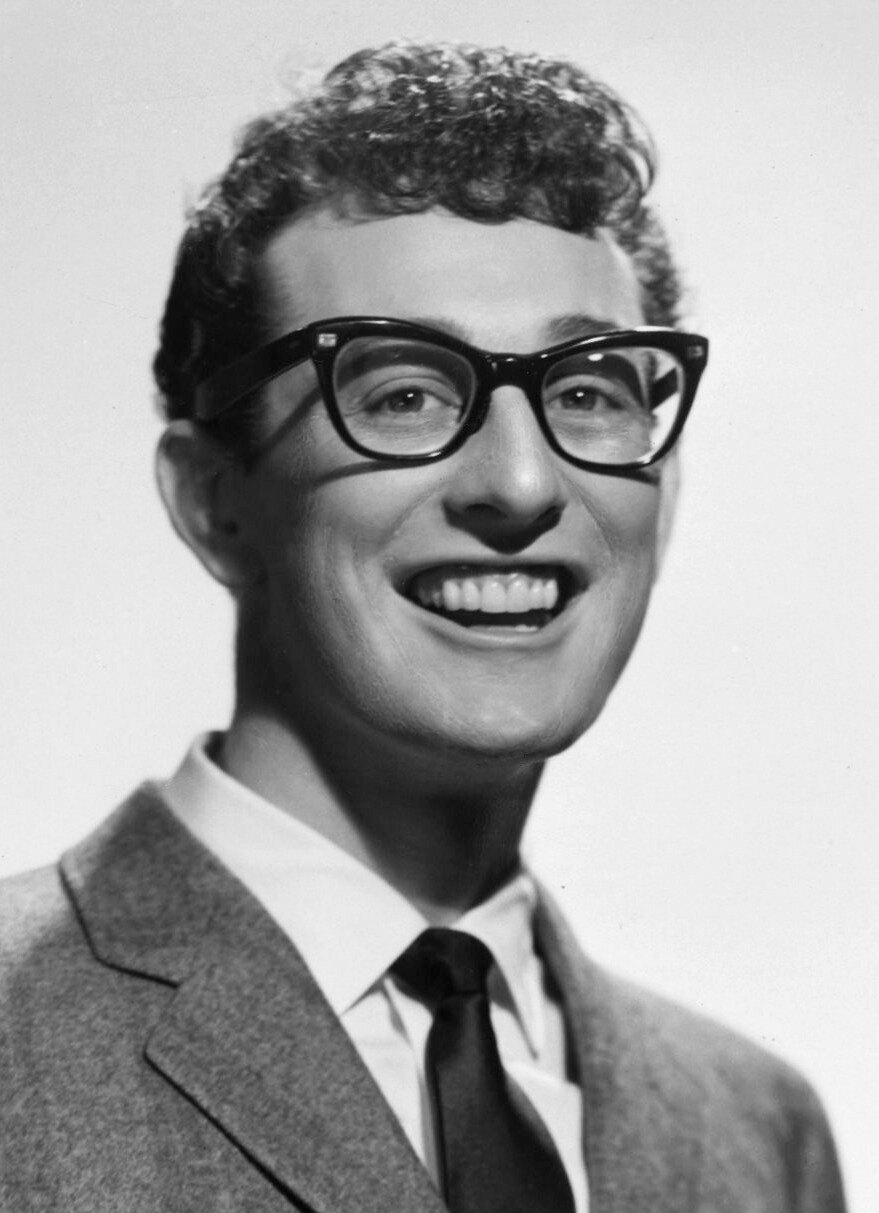
Buddy Holly was an American singer, songwriter and guitarist from Lubbock, Texas, who helped define rock and roll in the mid-1950s. With his band the Crickets he wrote and recorded songs that were simple, bright and rhythmic, and that many later stars copied. He died in a plane crash in 1959 at the age of 22. This page is the plain-English guide: who he was, what he made, and where to begin.
Listen to Buddy Holly now
Kalisha has a dedicated Buddy Holly station called Exclusively Buddy Holly: one continuous channel with his songs, free to start, with nothing to install. It is one of the exclusive single-artist channels in the app.
The short version
Buddy Holly grew up in Lubbock, Texas, and mixed country, gospel and rhythm and blues in his own style. With The Crickets he recorded That'll Be the Day in 1957, which went to number one in the United States and became one of the first great rock and roll records.
Over the next two years he wrote and recorded hits such as Peggy Sue, Everyday and Not Fade Away. On 3 February 1959 he died in a plane crash with Ritchie Valens and The Big Bopper, an event later called the day the music died.
The story in 4 chapters
From Lubbock to the studio
Charles Hardin Holley was born in Lubbock in 1936. He grew up playing country and gospel music, then turned to rhythm and blues and the new rock and roll sound he heard on the radio. He used the name Buddy Holly for his records, partly to avoid a mix-up with another singer.
In 1956 he began recording in Clovis, New Mexico, at a studio run by producer Norman Petty, where the band's sound took shape.
That'll Be the Day
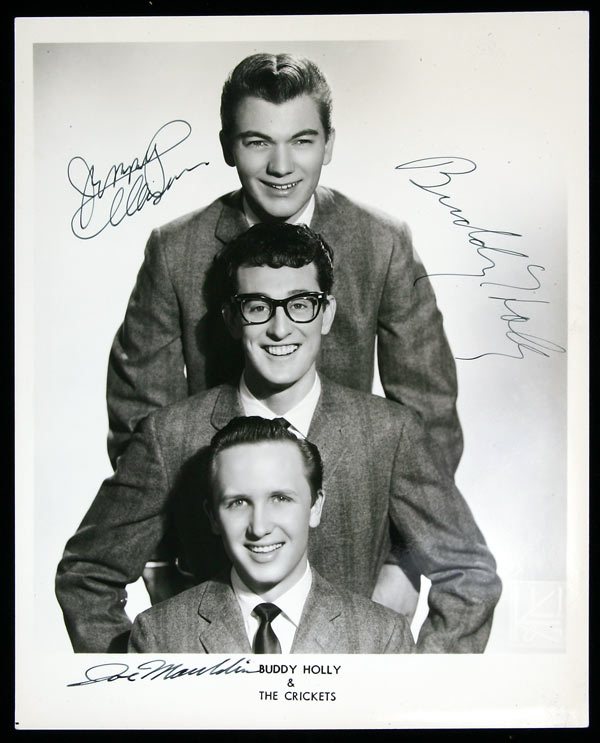
With The Crickets, Holly recorded That'll Be the Day, which reached number one in the United States in 1957. The same year brought Peggy Sue, Oh Boy! and Words of Love.
The band's tight guitar, bass and drums, and Holly's hiccuping vocal, became a model for many rock groups that followed.
Tours and the last winter
In 1958 Holly toured widely and released more songs, including Heartbeat and Rave On. He married Maria Elena Santiago that year, and the couple lived in New York.
In early 1959 he set out on the Winter Dance Party tour across the Midwest, travelling by bus in very cold weather. On 3 February 1959 the small plane carrying him, Ritchie Valens and The Big Bopper crashed shortly after takeoff near Clear Lake, Iowa.
Legacy
Several songs were released after his death, including It Doesn't Matter Anymore. Don McLean's 1971 song American Pie made the phrase the day the music died famous.
Holly was inducted into the Rock and Roll Hall of Fame in 1986, and artists from the Beatles to the Rolling Stones have recorded his songs.
Band members
The Crickets
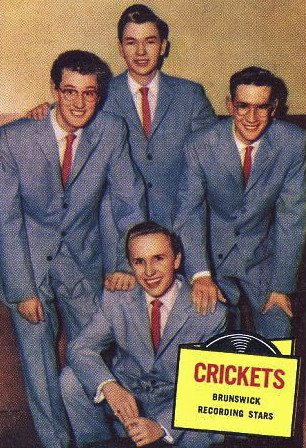
The group that recorded Holly's best-known songs. The line-up included Jerry Allison on drums, Joe B. Mauldin on bass and Niki Sullivan on rhythm guitar.
Norman Petty
The producer who recorded most of the Crickets' hits at his studio in Clovis, New Mexico.
Maria Elena Santiago
Holly's wife. She later spoke publicly about his life and career.
Albums in order
| Year | Album | In a sentence |
|---|---|---|
| 1957 | The ‘Chirping’ Crickets | The album by the Crickets, with That'll Be the Day and Not Fade Away. |
| 1958 | That'll Be the Day | A US album built around the hit single. |
| 1958 | Buddy Holly | A solo album of his own recordings. |
| 2008 | Purely Buddy Holly | A later compilation of his best recordings. |
12 songs that tell the story
That’ll Be the Day
The song that gave the band its name and a US number one.
Peggy Sue
A bright, rhythmic song, named after a girl Holly knew.
Everyday
A sweet, bouncing ballad with a famous Holly vocal.
Not Fade Away
A driving song later recorded by the Rolling Stones.
Oh Boy!
An upbeat rock and roll single.
Words of Love
A gentle song that was later covered by The Beatles.
Maybe Baby
A playful song with a steady beat.
Heartbeat
A bouncy song with a strong guitar part.
Rave On
A fast, energetic song that became a rock standard.
True Love Ways
A tender ballad released after his death.
It Doesn’t Matter Anymore
A melancholy song released after his death.
Raining in My Heart
A ballad from the period just before his death.
Things you may not know
Holly's black horn-rimmed glasses became one of the most famous looks in rock.
He used the name Buddy Holly partly to avoid confusion with another singer.
That'll Be the Day reached number one in the United States.
The plane crash of 3 February 1959 is remembered by that phrase.
Much of the Crickets' recording happened at Norman Petty's studio there.
The Beatles recorded Holly's songs, including Words of Love.
The Rolling Stones had a UK hit with Not Fade Away in 1964.
Holly was among the early inductees into the Rock and Roll Hall of Fame.
His recording career lasted only about three years.
He often played guitar wearing his black glasses.
Where to start
Start with That'll Be the Day and Peggy Sue.
Try Oh Boy!, Rave On and Heartbeat.
Play Everyday and Words of Love.
Listen to Not Fade Away, then the Crickets' album.
Frequently asked questions
Who was Buddy Holly?
An American singer, songwriter and guitarist from Lubbock, Texas, who helped shape rock and roll in the 1950s.
What is Buddy Holly’s biggest hit?
That’ll Be the Day, a number one in the United States in 1957.
How did Buddy Holly die?
In a plane crash on 3 February 1959, near Clear Lake, Iowa, together with Ritchie Valens and The Big Bopper.
Who were The Crickets?
The band Holly recorded with, including Jerry Allison, Joe B. Mauldin and Niki Sullivan.
What is ‘the day the music died’?
The phrase for 3 February 1959, the day of the plane crash, made famous by Don McLean’s song American Pie.
How old was Buddy Holly when he died?
He was 22 years old.
Did Buddy Holly write his songs?
He wrote or co-wrote many of his songs, and he and the Crickets recorded them together.
Where can I listen to Buddy Holly online?
You can listen to a continuous Buddy Holly station on Kalisha Radio, on your phone, tablet or computer, with nothing to install.
Where was Buddy Holly born?
Buddy Holly was born in Lubbock, Texas, on 7 September 1936, as Charles Hardin Holley.
Who was Buddy Holly's wife?
Holly married Maria Elena Santiago in 1958, and the couple lived in New York.
Where did Buddy Holly's plane crash?
The small plane carrying him crashed shortly after takeoff near Clear Lake, Iowa, on 3 February 1959.
Who was the song Peggy Sue named after?
Peggy Sue is named after a girl Holly knew.
More from Kalisha

Enjoyed this? The app is free to start.
Works on iPhone and Android — nothing to install