Joan Baez: Biography, Albums and Best Songs
Joan Baez was a folk singer from New York who became famous at the age of 18 with a voice of rare clarity. She sang at the 1963 March on Washington, shared stages with a young Bob Dylan, and spent her life linking music with nonviolence and human rights. She is still touring and painting today.
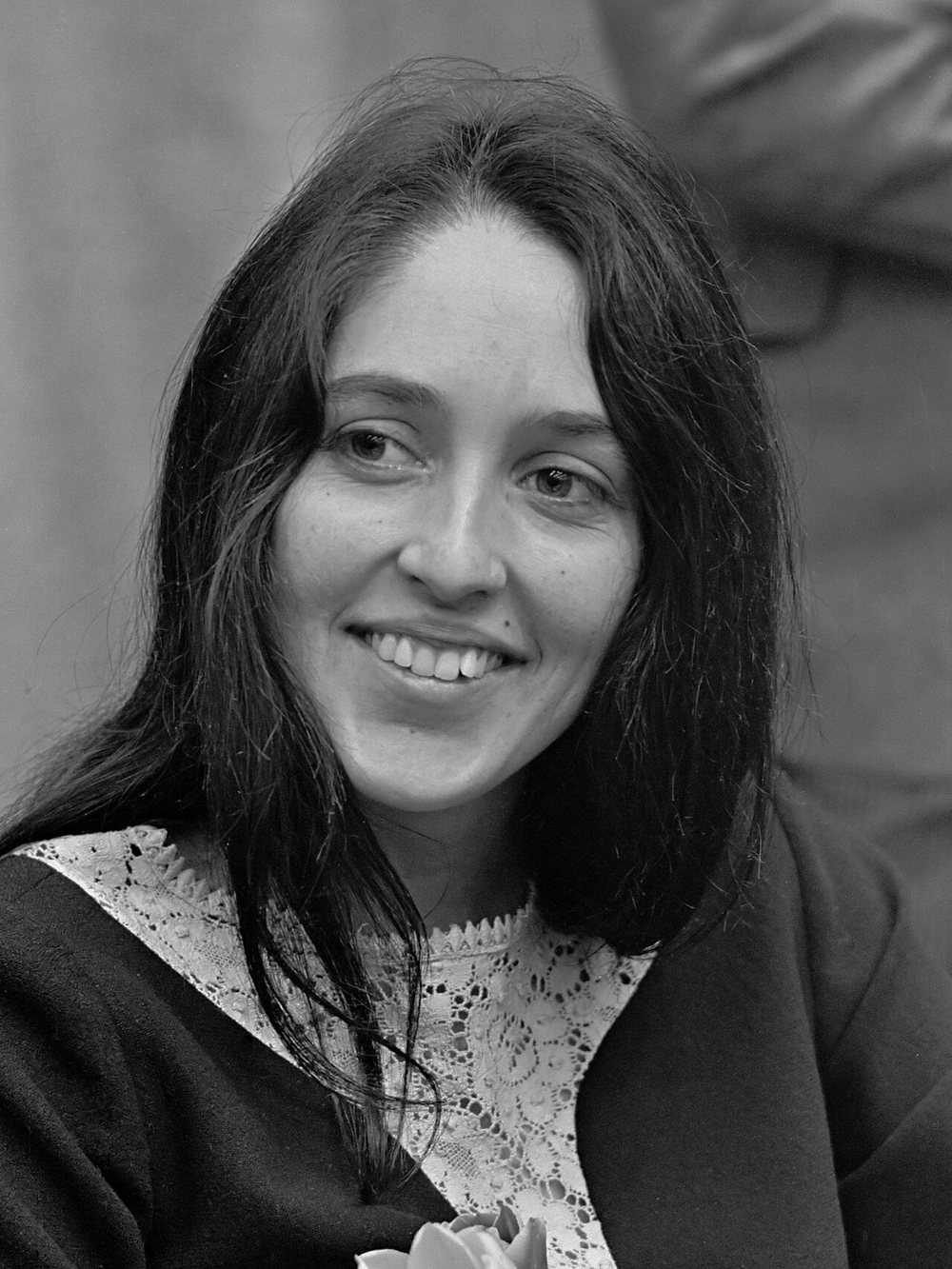
Listen to Joan Baez now
Kalisha has a dedicated Joan Baez station called Exclusively Joan Baez: one continuous channel with her songs, free to start, with nothing to install. It is one of the 312 exclusive single-artist channels in the app.
The short version
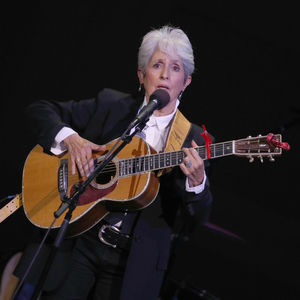
Joan Baez grew up in a family of Mexican heritage and Quaker faith, moved around the world with her father’s work, and started singing folk songs as a teenager. At 18 she was a sensation at the Newport Folk Festival, and by the early 1960s she was one of the most famous voices in America, with gold albums and the cover of Time.
She never stopped mixing music with activism. She sang at civil rights rallies, refused to play segregated venues, opened a school for nonviolence, and sang for human rights and peace across the world. Her best-known songs range from traditional ballads and Dylan covers to her own protest songs and the 1974 Spanish-language album Gracias a la Vida.
The story in 5 chapters
Quaker childhood and the Boston folk scene
Joan Chandos Baez was born in 1941, the second of three sisters. Her father was a physicist who later worked for UNESCO, so the family lived in many countries. As a teenager in California she heard Pete Seeger sing and began learning his songs. In 1958 the family moved to Boston, where her father joined MIT.
She made her first public appearance at Club 47 in Cambridge, where she sang for a handful of people. Soon she was singing there twice a week. At the 1959 Newport Folk Festival she sang with Bob Gibson, and the performance brought her the record deal that started her career.
Gold albums and the Dylan years
Her first album for Vanguard, Joan Baez (1960), was recorded in four days in a New York hotel ballroom. Her next album, Joan Baez, Vol. 2 (1961), went gold, like the two live albums that followed. Her sold-out concert at New York’s Town Hall in 1961 and a cover on Time in 1962 made her a star.
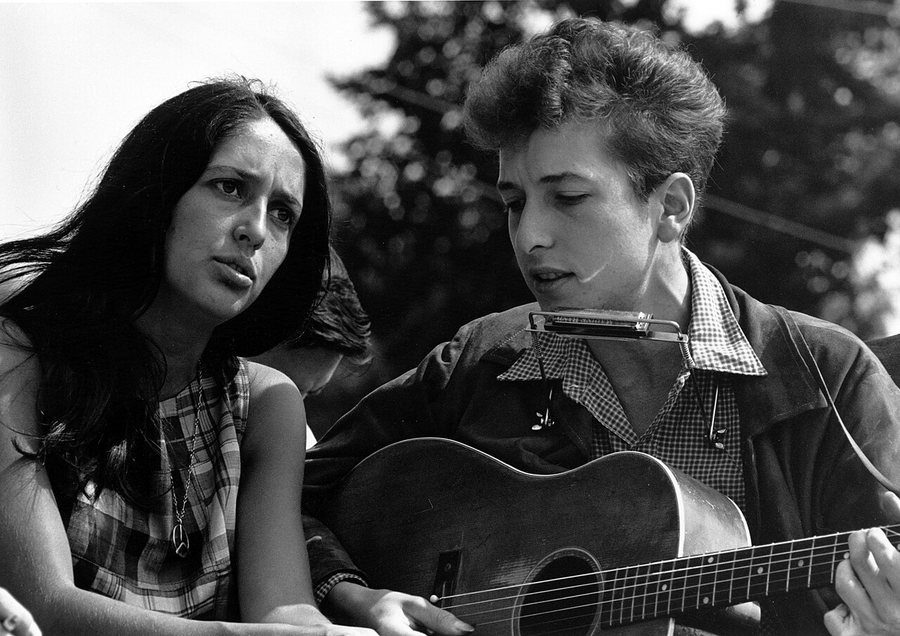
Baez was among the first major artists to record the songs of Bob Dylan, and she did much to make his early work known. Their friendship and rivalry became one of the most talked-about stories of the decade. In 1965 her cover of Phil Ochs’s “There but for Fortune” reached the top ten in Britain.
Marching for civil rights
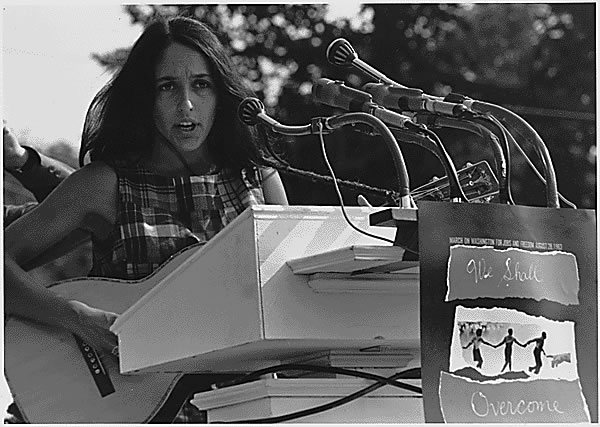
In August 1963 she sang “We Shall Overcome” at the March on Washington for Jobs and Freedom. The song became linked with her name for decades. She also sang at the Free Speech Movement rallies in Berkeley and joined the Selma to Montgomery marches in 1965.
With her husband, the anti-war activist David Harris, she made country-rock albums such as David’s Album (1969). In August 1969 she sang fourteen songs at the Woodstock Festival, which raised her profile around the world.
Protest, Vietnam and the new decade
In the 1970s Baez wrote more of her own songs, including “Sweet Sir Galahad”. Her 1971 cover of The Band’s “The Night They Drove Old Dixie Down” was a top-ten hit. She visited Hanoi in 1972, an experience she turned into the 23-minute title song of Where Are You Now, My Son? (1973).
Her 1975 album Diamonds & Rust was the best-selling of her career and gave her a second top-ten single. In 1985 she opened the American part of Live Aid, and in 1987 her autobiography And a Voice to Sing With became a New York Times bestseller.
Later years and new songwriters
In 1989 she sang in Czechoslovakia, where she let the dissident Václav Havel carry her guitar, and her performance helped inspire the Velvet Revolution. She continued to record albums of other songwriters, including Steve Earle, Josh Ritter and Natalie Merchant.
She was inducted into the Rock and Roll Hall of Fame in 2017 and received the Kennedy Center Honors in 2021. She stepped back from full touring in 2019 and now focuses much of her time on painting and portraits.
Band members
Bob Dylan and Joan Baez performing together. · Photo: Rowland Scherman · public domain, Wikimedia CommonsBob Dylan
Baez recorded his songs early and introduced him to large audiences. Their friendship and public rivalry inspired songs by both of them.
David Harris
A prominent protester against the Vietnam War who turned Baez toward country-rock on David’s Album. She wrote “A Song for David” for him.
Mimi Fariña
Her younger sister was also a singer and activist. Baez stayed close to her until Mimi’s death in 2001.
Pete Seeger
The folk singer whose concert Baez heard as a teenager. She learned his songs and later sang at many of the same causes.
Albums in order
| Year | Album | In a sentence |
|---|---|---|
| 1960 | Joan Baez | The debut for Vanguard, recorded in four days in a New York hotel ballroom. |
| 1961 | Joan Baez, Vol. 2 | Traditional songs and ballads, and her first gold album. |
| 1965 | Farewell, Angelina | Several Dylan songs mixed with traditional material and new instruments. |
| 1968 | Any Day Now | A full album of Bob Dylan covers, recorded in Nashville. |
| 1969 | David’s Album | Country-rock songs recorded for her husband David Harris. |
| 1971 | Blessed Are… | Includes her top-ten cover of “The Night They Drove Old Dixie Down”. |
| 1974 | Gracias a la Vida | Spanish-language songs, including the title song by Violeta Parra. |
| 1975 | Diamonds & Rust | Her best-selling album, with the title song as a top-ten single. |
12 songs that tell the story
We Shall Overcome
Sung at the March on Washington, it became her signature song for social justice.
There but for Fortune
A cover of Phil Ochs that was a top-ten hit in Britain.
Farewell, Angelina
A Dylan song that she made her own, with a haunting vocal.
Birmingham Sunday
A song about the 1963 church bombing, written by her brother-in-law Richard Fariña.
Blowin’ in the Wind
The Dylan song she sang at many concerts, and at the 1983 Grammy Awards.
Sweet Sir Galahad
One of her early self-written songs, about her sister Mimi’s second marriage.
The Night They Drove Old Dixie Down
Her cover of The Band’s song, a top-ten hit in the United States.
Where Are You Now, My Son?
A 23-minute spoken and recorded piece about her visit to Hanoi.
Gracias a la Vida
Violeta Parra’s song, sung in Spanish and loved in Latin America.
Diamonds & Rust
A song about her past relationship with Bob Dylan, and a top-ten hit.
Any Day Now
A Dylan song from the all-cover album of the same name.
Joe Hill
A song about a union activist, in her strong folk style.
Things you may not know
The “Madonna” nickname of her early years came from her clear voice, long hair and natural looks.
Her first album for Vanguard (1960) was recorded in just four days in a New York hotel ballroom.
Her 1961 concert at New York’s Town Hall was sold out, and a critic praised her “satin” voice.
She was on the cover of Time in November 1962, a rare honour for a musician at the time.
She would not play at colleges or venues that were segregated, so on Southern tours she played only at black colleges.
In 1965 she and Ira Sandperl founded the Institute for the Study of Non-violence in Carmel Valley, California.
In 1989 she let Václav Havel carry her guitar to keep him from being arrested by government agents.
She opened the American part of the 1985 Live Aid concert in Philadelphia.
She sang fourteen songs at Woodstock in 1969, and the festival film raised her profile worldwide.
In 2023 Rolling Stone ranked her number 189 on its list of the 200 greatest singers of all time.
Where to start
Start with Joan Baez (1960) and Joan Baez, Vol. 2 (1961).
Try We Shall Overcome and There but for Fortune.
Listen to Diamonds & Rust (1975) and Gracias a la Vida (1974).
Try Any Day Now (1968) and Farewell, Angelina (1965).
Frequently asked questions
Who is Joan Baez?
An American folk singer and activist, born in 1941, known for her clear soprano voice and for songs of protest and peace.
What is Joan Baez’s best-known song?
“We Shall Overcome” is the song most closely linked with her, after she sang it at the 1963 March on Washington. “Diamonds & Rust” is her best-known solo hit.
Did Joan Baez play at Woodstock?
Yes. In August 1969 she sang fourteen songs at the festival.
Was Joan Baez in a relationship with Bob Dylan?
They were close friends and performed together in the early 1960s. Their relationship became the subject of songs by both of them.
When did Joan Baez join the Rock and Roll Hall of Fame?
She was inducted in 2017.
What are her most famous albums?
Joan Baez (1960), Joan Baez, Vol. 2 (1961), Diamonds & Rust (1975) and Gracias a la Vida (1974) are the usual starting points.
Does Joan Baez still perform?
She stepped back from full touring in 2019 and now focuses mainly on painting and portraits, but she still performs occasionally.
Where can I listen to Joan Baez for free?
Open the Kalisha web radio, choose Joan Baez, and the exclusive station plays her music without installing anything.
When and where was Joan Baez born?
She was born on 9 January 1941 in Staten Island, New York.
Who was Joan Baez's husband?
She was married to the anti-war activist David Harris, and she wrote "A Song for David" for him.
Who was Joan Baez's sister?
Her younger sister Mimi Fariña was also a singer and activist, and Baez stayed close to her until Mimi's death in 2001.
Who was Joan Baez's father?
Her father was a physicist who later worked for UNESCO, so the family lived in many countries.
How did Joan Baez get famous?
At 18 she was a sensation at the Newport Folk Festival, and her 1959 performance there brought her the record deal that started her career.
More from Kalisha


Enjoyed this? The app is free to start.
Works on iPhone and Android — nothing to install