AC/DC: History, Members, Albums and Best Songs
AC/DC began in Sydney in 1973 when brothers Malcolm and Angus Young, both born in Scotland, decided that rock and roll should be loud, simple and fun. Fifty years later they are still doing exactly that. They have sold an estimated 200 million records, made Back in Black one of the best-selling albums of all time, and kept the same formula through two singers, one tragedy and one comeback. This page is the plain-English guide: who they are, what they made, and where to begin.
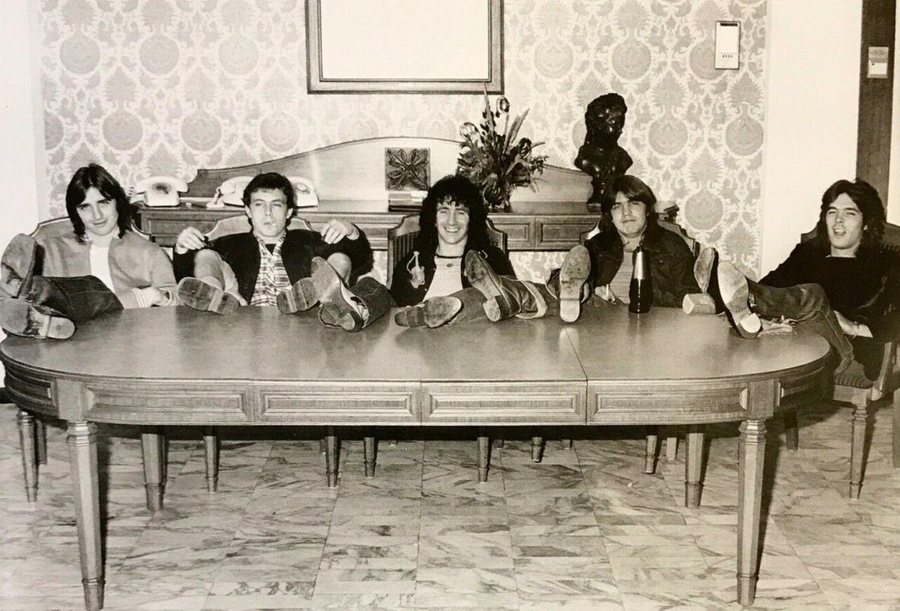
Listen to AC/DC now
Kalisha has a dedicated AC/DC station: one continuous channel with the band’s songs, free to start, with nothing to install. It is one of the 312 exclusive single-artist channels in the app.
The short version
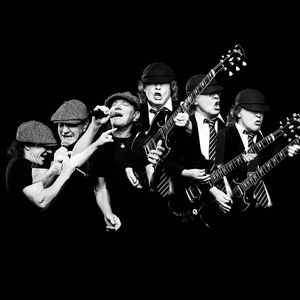
AC/DC are an Australian hard rock band led by guitarist Angus Young, who plays lead in a school uniform, and his older brother Malcolm, who played rhythm guitar and ran the band until he stepped down in 2014. Their style has barely changed since 1975: tight riffs, a steady beat, a screaming singer and choruses made to be shouted back by crowds.
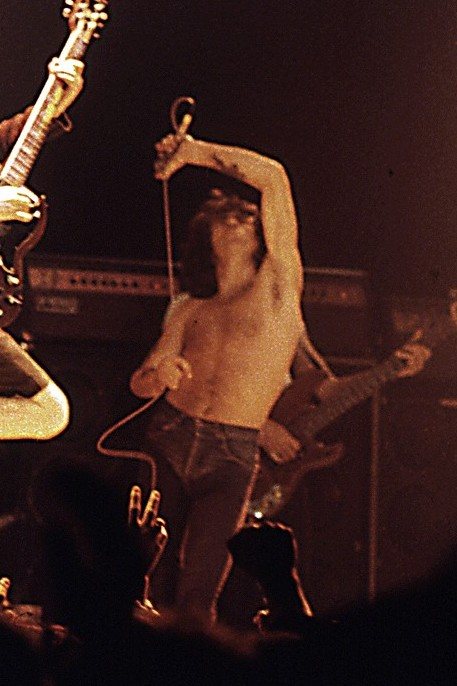
The singers are the dividing line. Bon Scott, a rowdy, funny frontman, took them from Australian pub rock to the edge of international success, then died suddenly in February 1980. Weeks later the band hired Brian Johnson and made Back in Black, the album that turned them into one of the biggest rock bands in the world.
The story in 5 chapters
Two brothers and a sewing machine
The Young family moved from Glasgow to Sydney in 1963. Malcolm and Angus started the band in 1973, and the name, according to the family, came from their sister Margaret, who spotted the letters “AC/DC” on a sewing machine. Angus’s schoolboy uniform, now his trademark, was her idea too.
They recorded their first records in Sydney with producers George Young (their older brother) and Harry Vanda, both from the 1960s pop band The Easybeats.
Bon Scott and the road to the top
Bon Scott, a Scottish-born singer who had grown up in Australia, joined in 1974. With him the band made High Voltage, T.N.T., Dirty Deeds Done Dirt Cheap and Let There Be Rock, and became stars at home. Their song It’s a Long Way to the Top, with bagpipes, was filmed on a moving truck in Melbourne.
Highway to Hell (1979), produced by Mutt Lange, finally broke the band in the United States. It was the last album with Scott.
Back in Black
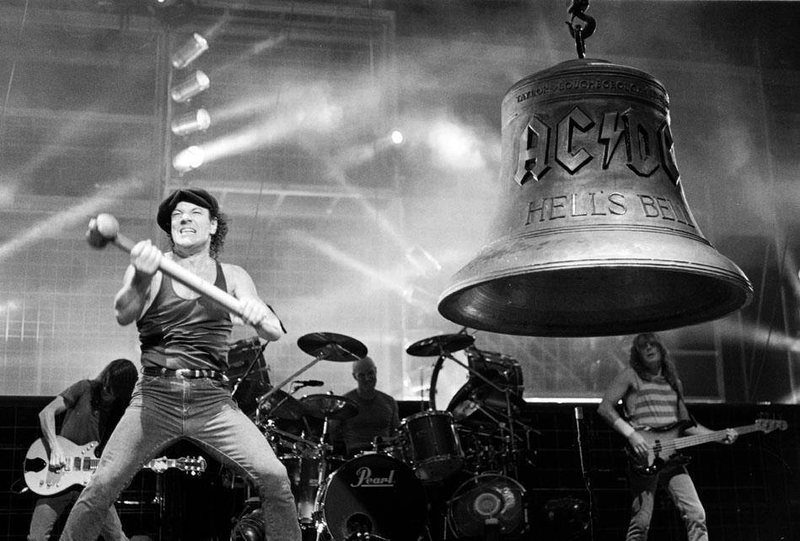
Bon Scott died in London on 19 February 1980 at the age of 33. The band almost stopped, but decided to continue and hired Brian Johnson, a singer from the north of England. Five months later they released Back in Black, with a plain black cover as a mark of respect, and an opening song, Hells Bells, that begins with a funeral bell.
The album sold tens of millions of copies and is regularly described as one of the best-selling of all time. For Those About to Rock (1981) and Flick of the Switch (1983) followed.
The long road
The 1980s were uneven, but The Razors Edge (1990) brought the band back with Thunderstruck and Moneytalks. They were inducted into the Rock and Roll Hall of Fame in 2003, and kept recording, touring and selling out stadiums.
Black Ice (2008) was their first studio album in eight years and reached number one in many countries, followed by a huge world tour.
Losses and a return
Malcolm Young, who had been the band’s leader behind the scenes, left in 2014 because of dementia and died in 2017. His nephew Stevie Young took his place. In 2016 Brian Johnson had to stop touring because of hearing problems, and Axl Rose of Guns N’ Roses sang with the band for the rest of the tour.
In 2020 the band came back with Power Up, dedicated to Malcolm, with Johnson, drummer Phil Rudd and bassist Cliff Williams all returning.
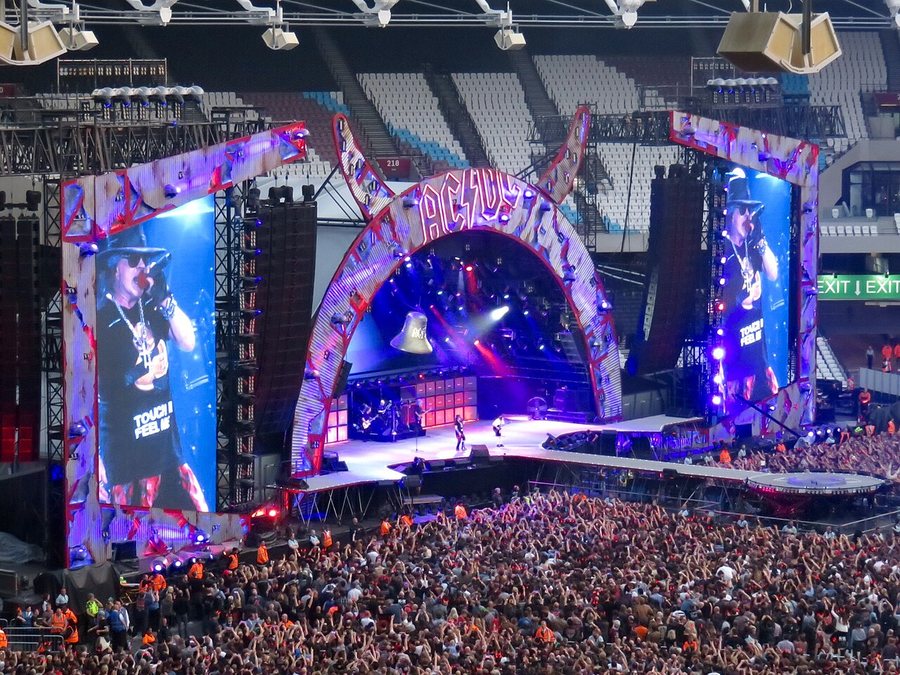
Band members
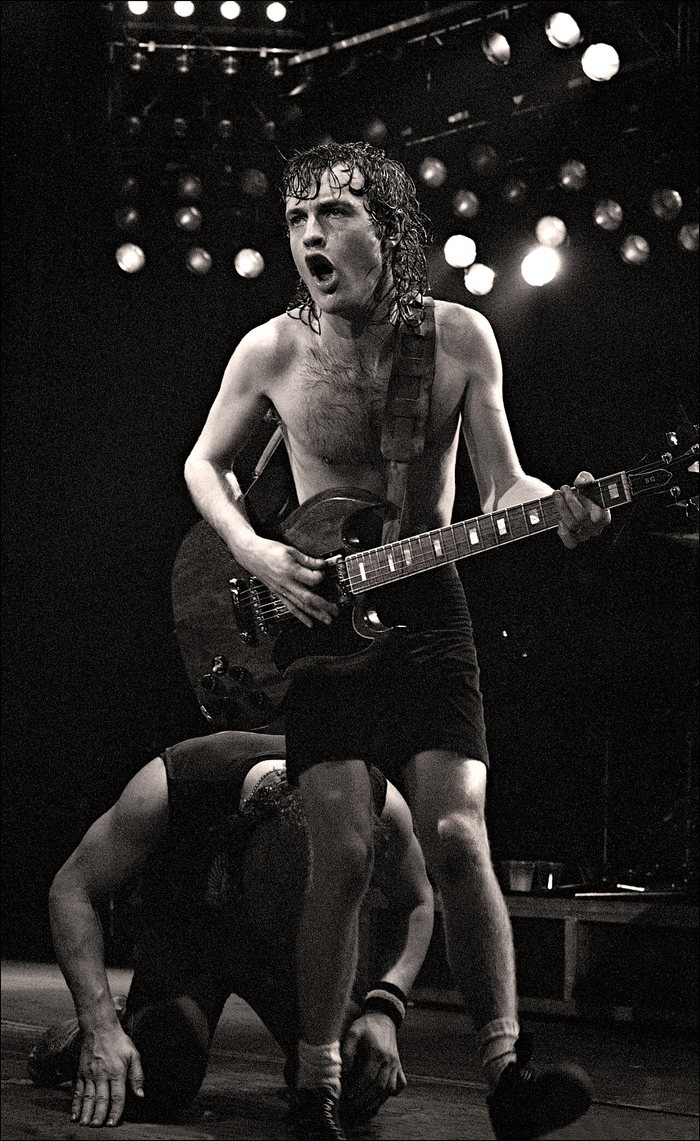 Angus Young at the Manchester Apollo, 1982. · Photo: Harry (Howard) Potts · CC BY 2.0, Wikimedia Commons
Angus Young
The face of the band. He plays in a school uniform, duck-walks across the stage and still delivers the guitar solos on nearly every record.
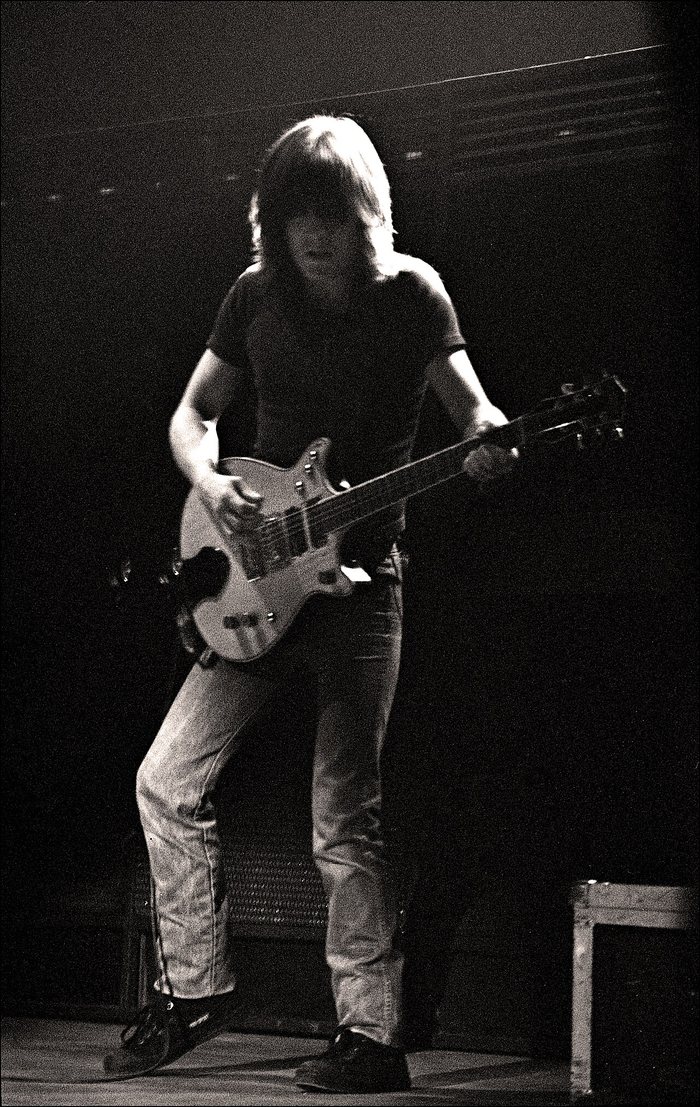 Malcolm Young at the Manchester Apollo, 1982. · Photo: Harry (Howard) Potts · CC BY 2.0, Wikimedia Commons
Malcolm Young
The founder and the engine. His precise rhythm playing is the backbone of the AC/DC sound. He died in 2017.
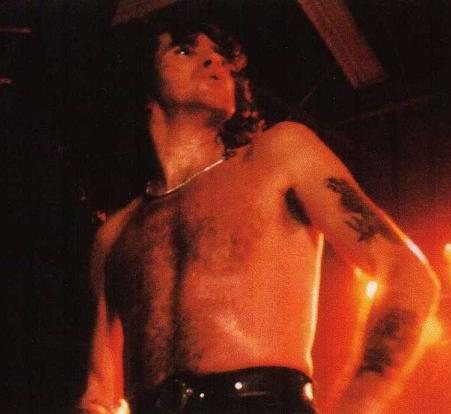 Bon Scott in Grenoble, December 1979. · Photo: Elfast · public domain, Wikimedia Commons
Bon Scott
The singer on the early classics. Known for his humour and stage presence. He died in 1980, at the height of the band’s first big success.
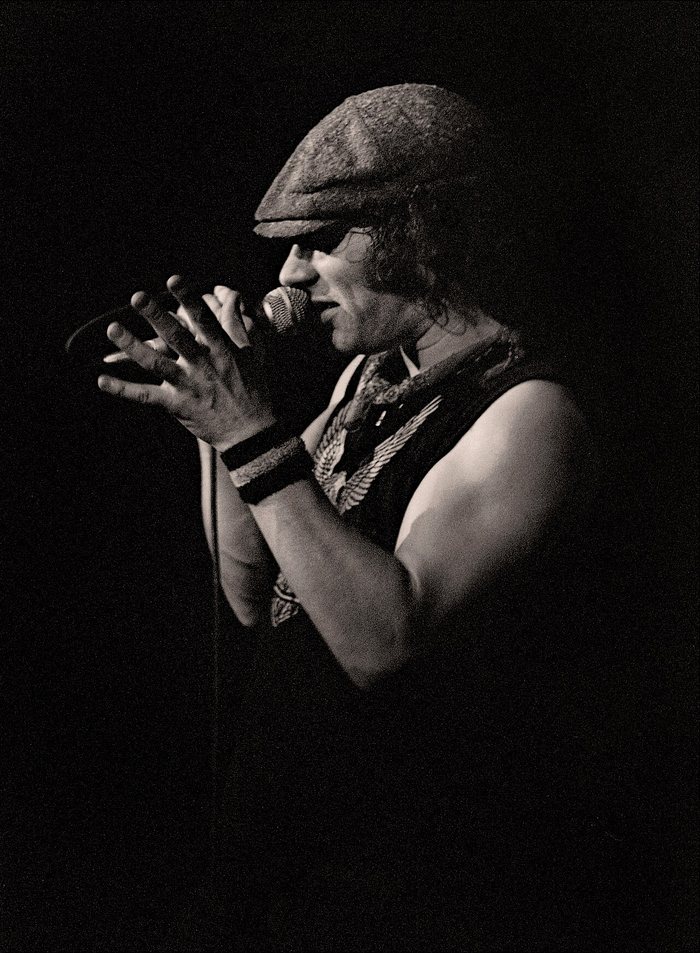 Brian Johnson at the Manchester Apollo, 1982. · Photo: Harry (Howard) Potts · CC BY 2.0, Wikimedia Commons
Brian Johnson
Joined weeks after Bon Scott’s death and sang on Back in Black. Instantly recognisable for his flat cap and gravelly voice.
Phil Rudd and Cliff Williams
The rhythm section for most of the band’s biggest years. Rudd played drums on the 1975–1983 albums and returned later; Williams played bass from 1977 until his retirement in 2016, then returned for Power Up.
Albums in order
| Year | Album | In a sentence |
|---|---|---|
| 1975 | High Voltage | The Australian debut: raw boogie rock, recorded fast. |
| 1975 | T.N.T. | Includes It’s a Long Way to the Top and the title song. |
| 1976 | Dirty Deeds Done Dirt Cheap | A raw, funny album with the title song and Big Balls. |
| 1977 | Let There Be Rock | A faster, harder record built on boogie rock. |
| 1978 | Powerage | Often named by fans as one of the band’s most underrated albums. |
| 1979 | Highway to Hell | The breakthrough, produced by Mutt Lange; the last with Bon Scott. |
| 1980 | Back in Black | The tribute album and one of the best-selling of all time. |
| 1981 | For Those About to Rock (We Salute You) | A big, cannon-firing follow-up with a number-one US debut. |
| 1983 | Flick of the Switch | Stripped-down and minimalist. |
| 1985 | Fly on the Wall | A transitional album with a darker, more experimental sound. |
| 1988 | Blow Up Your Video | A return to the classic style, with Heatseeker. |
| 1990 | The Razors Edge | The comeback, with Thunderstruck. |
| 1995 | Ballbreaker | Produced by Rick Rubin, with a heavy, crisp sound. |
| 2000 | Stiff Upper Lip | A back-to-basics album of blues-based hard rock. |
| 2008 | Black Ice | The first new album in eight years, and a worldwide hit. |
| 2014 | Rock or Bust | The first album without Malcolm Young. |
| 2020 | Power Up | The comeback album, dedicated to Malcolm Young. |
12 songs that tell the story
It’s a Long Way to the Top (If You Wanna Rock ’n’ Roll)
A song about life on the road, with bagpipes played by Bon Scott on a moving truck in the video.
T.N.T.
A chanted “Oi! Oi! Oi!” that crowds still shout back at the band.
Whole Lotta Rosie
A huge, thumping song about a very large woman, and a fixture of their live shows.
Let There Be Rock
A retelling of the history of rock and roll with a very long guitar solo.
Highway to Hell
Their signature song: a riff everyone knows, about the road and the life that goes with it.
Hells Bells
Opens with a funeral bell and a slow, ominous riff, a tribute after Bon Scott’s death.
Back in Black
The title song, with one of the most recognisable riffs in rock.
You Shook Me All Night Long
Brian Johnson’s first big hit, a party anthem.
For Those About to Rock (We Salute You)
The song that ends their concerts, traditionally with a salute of cannon fire.
Thunderstruck
A pulsing guitar line that builds like a storm, and a stadium favourite.
Shoot to Thrill
A tense, crunching song that returned to popularity after appearing in Iron Man 2.
Shot in the Dark
The lead single of the comeback album, proof that the sound has not changed.
Things you may not know
The family says their sister Margaret spotted the letters AC/DC on a sewing machine.
Angus Young’s uniform, which he wears on stage, was also his sister Margaret’s idea.
The 1976 video for It’s a Long Way to the Top was filmed on a moving truck in Melbourne, with Bon Scott playing the bagpipes.
The plain black cover of Back in Black was a sign of mourning for Bon Scott.
At concerts, a giant bell is lowered on stage during Hells Bells.
For Those About to Rock is traditionally played with a salute of cannon fire.
George Young, older brother of Malcolm and Angus, co-produced their early albums.
When Brian Johnson had to stop touring, Axl Rose of Guns N’ Roses finished the tour with the band.
The band has sold an estimated 200 million records worldwide.
Mutt Lange, later known for Def Leppard and Shania Twain, produced both Highway to Hell and Back in Black.
Where to start
Start with Back in Black and Highway to Hell.
Try Let There Be Rock and Dirty Deeds Done Dirt Cheap.
The Razors Edge (1990), Black Ice (2008) and Power Up (2020).
Powerage (1978) is the album fans often recommend after the big ones.
Frequently asked questions
Who are the members of AC/DC?
The current line-up includes Angus Young (lead guitar), Brian Johnson (vocals), Stevie Young (rhythm guitar), Phil Rudd (drums) and Cliff Williams (bass). Founding member Malcolm Young died in 2017 and Bon Scott died in 1980.
What does AC/DC stand for?
It is not an abbreviation for words. The family says the name came from the letters AC/DC (alternating current/direct current) that their sister Margaret saw on a sewing machine.
What is AC/DC’s best-selling album?
Back in Black (1980) is by far the best known, and is often listed among the best-selling albums in history.
How many studio albums has AC/DC made?
Seventeen, from High Voltage (1975) to Power Up (2020).
Who replaced Bon Scott?
Brian Johnson, a singer from the north of England, joined in 1980 and sang on Back in Black.
Why did Malcolm Young leave the band?
He left in 2014 because of dementia and died in 2017.
Is AC/DC still touring?
Yes. The band returned to touring after releasing Power Up in 2020.
Where can I listen to AC/DC online?
You can listen to a continuous AC/DC station on Kalisha Radio, on your phone, tablet or computer, with nothing to install.
When did Bon Scott die?
He died in London on 19 February 1980, at the age of 33.
How did AC/DC get their name?
According to the family, their sister Margaret spotted the letters AC/DC on a sewing machine.
Where is AC/DC from?
The band was formed in Sydney, Australia, in 1973 by brothers Malcolm and Angus Young, who were both born in Scotland.
Who was AC/DC's drummer?
Phil Rudd played drums on the 1975 to 1983 albums and returned to the band later.
More from Kalisha


Enjoyed this? The app is free to start.
Works on iPhone and Android — nothing to install