Led Zeppelin: History, Members, Albums and Best Songs
Led Zeppelin were a British rock band formed in London in 1968. Guitarist Jimmy Page, singer Robert Plant, bassist and keyboard player John Paul Jones and drummer John Bonham mixed blues, folk, Indian and Arabic colours and sheer volume into a sound that shaped hard rock and heavy metal. They made nine studio albums in twelve years and have sold an estimated 200 million records worldwide. This page is the plain-English guide: who they are, what they made, and where to begin.
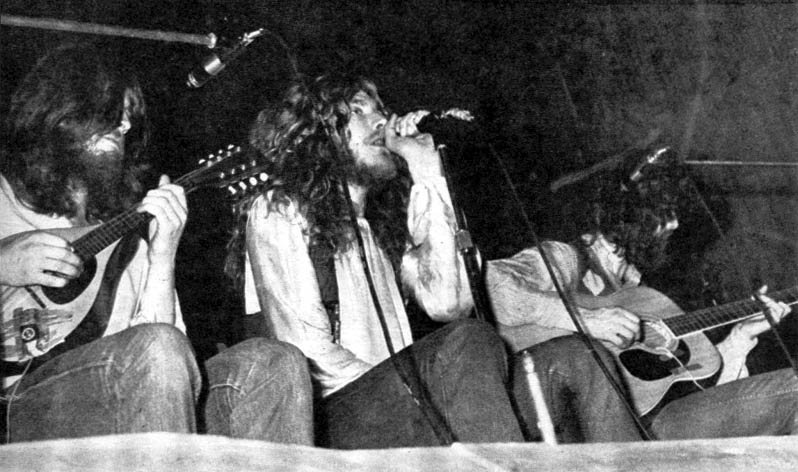
Listen to Led Zeppelin now
Kalisha has a dedicated Led Zeppelin station called Exclusively Led Zeppelin: one continuous channel with the band’s songs, free to start, with nothing to install. It is one of the 312 exclusive single-artist channels in the app.
The short version
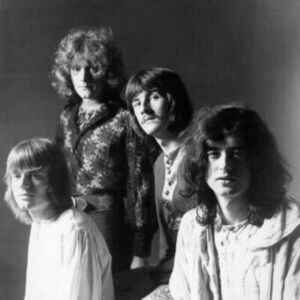
Led Zeppelin began when guitarist Jimmy Page, a top London session player who had just played in the Yardbirds, put together a new group in 1968. Their first album came out in early 1969, and by the early 1970s they were one of the biggest live acts in the world, with songs like Whole Lotta Love, Black Dog and Stairway to Heaven.
The band ended in 1980 when drummer John Bonham died. The three surviving members have reunited only for one-off occasions, most famously a full concert at London’s O2 Arena in 2007, and the records remain among the most played in rock radio.
The story in 5 chapters
A new band from the Yardbirds
When the Yardbirds broke up in 1968, Jimmy Page was left with the name and some tour dates. He recruited singer Robert Plant, who recommended his friend, the drummer John Bonham, and added John Paul Jones, an experienced session bassist and arranger. They rehearsed for only a few days before recording.
The group first toured as the New Yardbirds, then took the name Led Zeppelin. Manager Peter Grant won them a record deal with Atlantic, one of the best offered to a new act at the time.
Led Zeppelin I, II and III
Led Zeppelin (1969) was recorded in about thirty hours and mixed blues songs like Dazed and Confused with heavier originals such as Good Times Bad Times. Led Zeppelin II (1969) followed within months and included Whole Lotta Love, which became their first big American hit.
Led Zeppelin III (1970) surprised fans with acoustic, folk-influenced songs next to the thundering Immigrant Song.
The untitled fourth album and Houses of the Holy
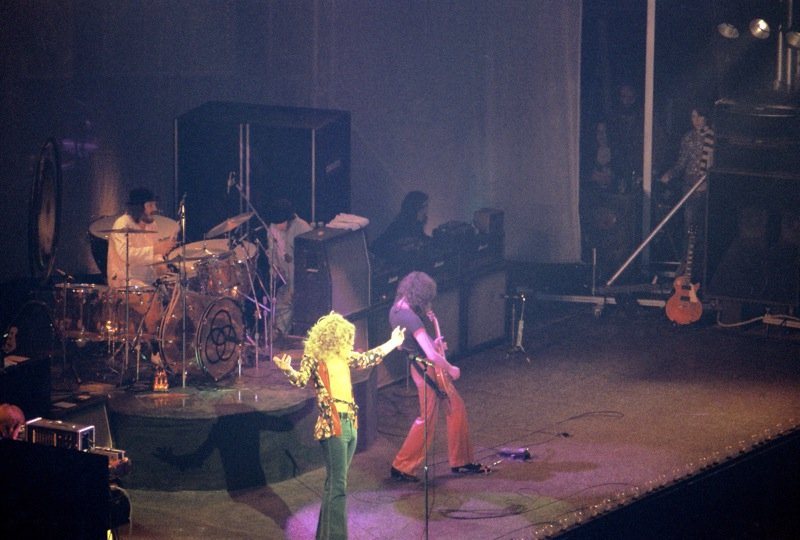
The fourth album (1971) carried no title and no band name on the cover, only four symbols, one for each member. It is usually called Led Zeppelin IV and holds Black Dog, Rock and Roll, When the Levee Breaks and Stairway to Heaven, a song that grew from a quiet start into a huge finale.
Houses of the Holy (1973) brought a wider palette, from funk to reggae, and sent the band on record-setting American tours.
Swan Song and Physical Graffiti
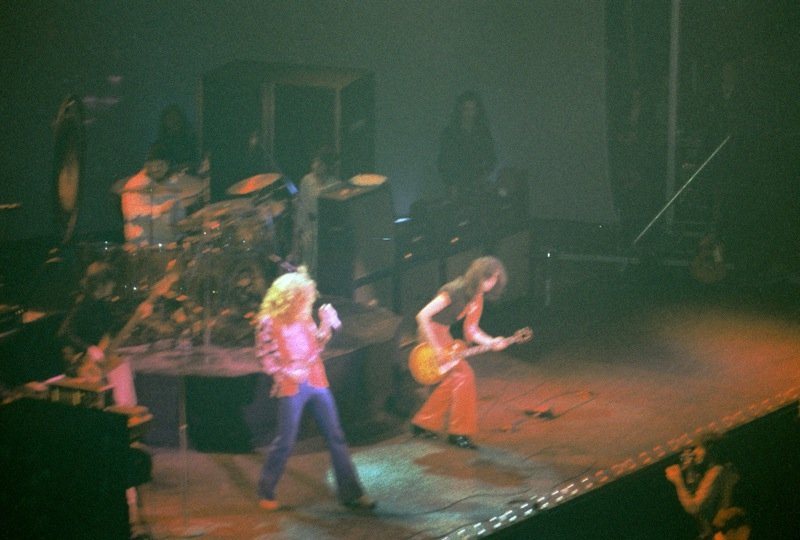
In 1974 the band started its own label, Swan Song. Their first release on it was the double album Physical Graffiti (1975), with the epic Kashmir. Presence (1976) was recorded quickly while Plant recovered from a serious car accident.
In Through the Out Door (1979) leaned on keyboards and reached number one in both the US and the UK. They played two huge open-air shows at Knebworth in England in August 1979.
After Bonham
John Bonham died in September 1980 at the age of 32. In December the remaining three announced that they could not carry on as Led Zeppelin without him, and the band came to an end. Coda (1982) collected unreleased recordings.
The surviving members played short sets at Live Aid in 1985 and in 1988, and on 10 December 2007 they gave a full concert at the O2 Arena in London, with Bonham’s son Jason on drums. It was filmed and released as Celebration Day.
Band members
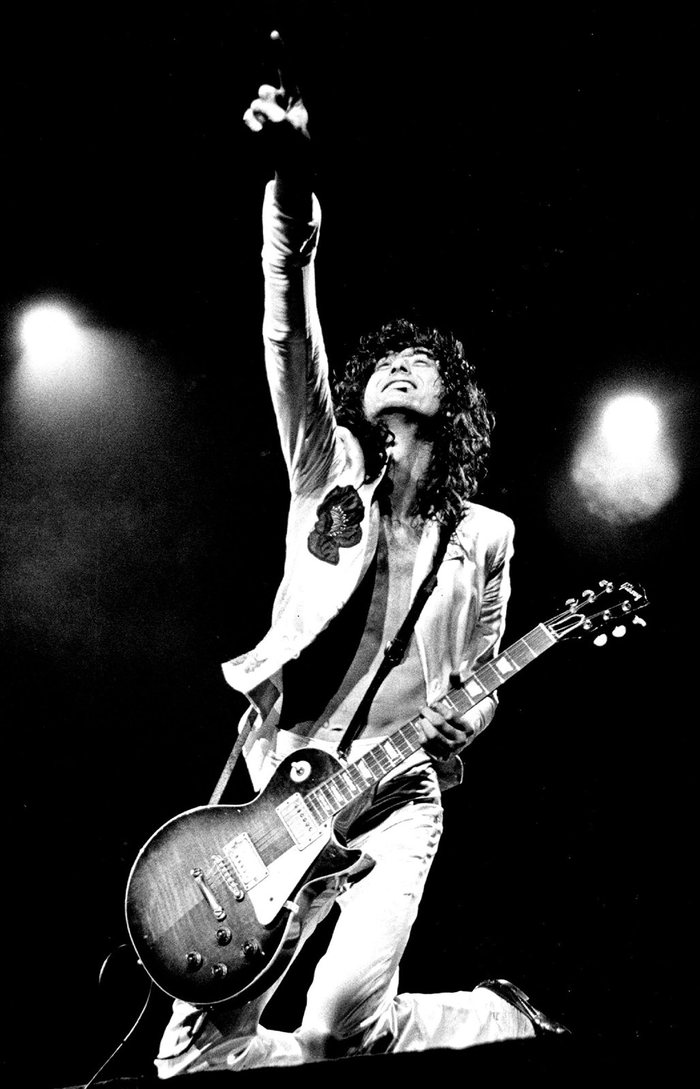 Jimmy Page performing live in 1977. · Photo: APA-Agency for the Performing Arts-management · public domain, Wikimedia Commons
Jimmy Page
Born in 1944, a leading London session guitarist before the band. He wrote most of the riffs, produced every record and used the studio as an instrument.
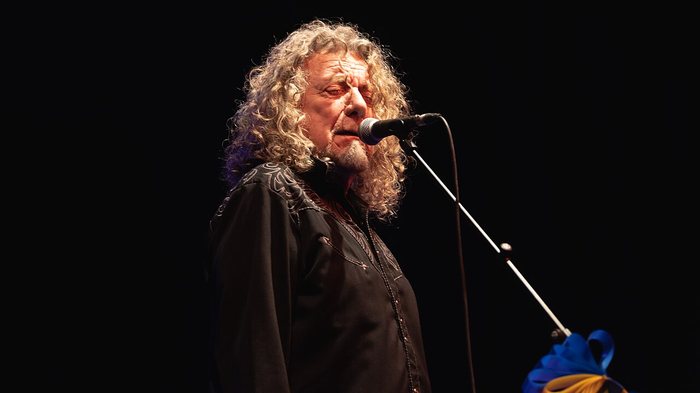 Robert Plant in 2022, Folkestone. · Photo: Raph_PH · CC BY 2.0, Wikimedia Commons
Robert Plant
Born in 1948 in West Bromwich. A high, wailing singer and the main lyricist; he later had a long solo career and made albums with bluegrass star Alison Krauss.
 John Paul Jones in 2010. · Photo: https://www.flickr.com/photos/laraclifford/ Lara Clifford] · CC BY 2.0, Wikimedia Commons
John Paul Jones
Born John Baldwin in 1946. A skilled session musician and arranger who gave the band its musical glue, from the funky bass of Trampled Under Foot to the mellotron of Kashmir.
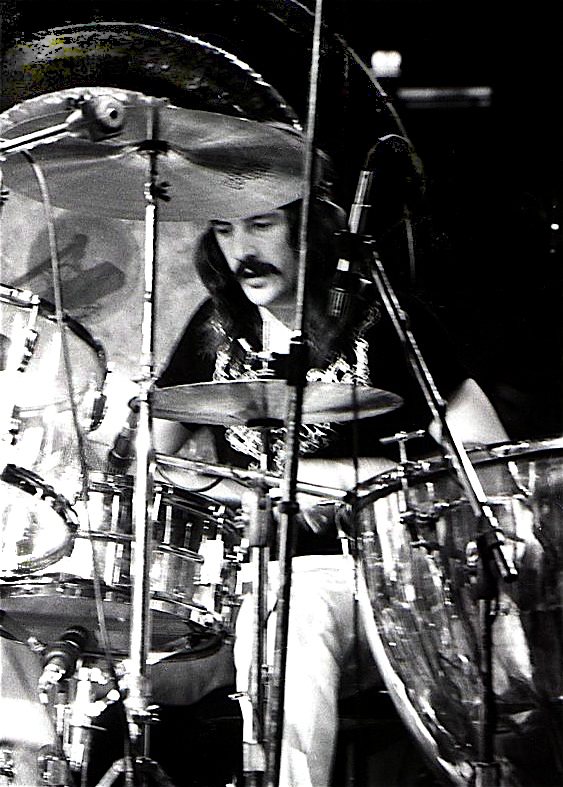 John Bonham of Led Zeppelin. · Photo: Dina Regine · CC BY-SA 2.0, Wikimedia Commons
John Bonham
Born in 1948 in Redditch. Admired for the weight, speed and swing of his playing; his drum sound on When the Levee Breaks is among the most imitated in rock.
Albums in order
| Year | Album | In a sentence |
|---|---|---|
| 1969 | Led Zeppelin | The debut, with Good Times Bad Times and Dazed and Confused. |
| 1969 | Led Zeppelin II | Includes Whole Lotta Love and Ramble On. |
| 1970 | Led Zeppelin III | Acoustic touches plus Immigrant Song. |
| 1971 | Led Zeppelin IV | Untitled; Black Dog, Rock and Roll, Stairway to Heaven. |
| 1973 | Houses of the Holy | Includes The Song Remains the Same and D’yer Mak’er. |
| 1975 | Physical Graffiti | A double album with Kashmir and Trampled Under Foot. |
| 1976 | Presence | A tight, guitar-heavy record with Achilles Last Stand. |
| 1979 | In Through the Out Door | Keyboard-led, with All My Love. |
| 1982 | Coda | Outtakes and rarities released after the break-up. |
12 songs that tell the story
Good Times Bad Times
The opening track of the debut, built on a famous bass-drum pattern by Bonham.
Dazed and Confused
A slow, dark blues piece known for Page’s violin-bow guitar solo.
Whole Lotta Love
A giant riff and a wild middle section; their first American top-ten single.
Ramble On
A mix of soft folk verses and a thumping chorus.
Immigrant Song
A short, fierce song that opens the third album with a wail.
Since I’ve Been Loving You
A slow, heavy blues with one of Page’s best solos.
Black Dog
A riff that shifts its beat, answered by Plant’s vocal.
Rock and Roll
A fast tribute to 1950s rock and roll.
Stairway to Heaven
An eight-minute song that builds from acoustic guitar to a full rock finale.
When the Levee Breaks
A blues cover reshaped around Bonham’s huge drum sound.
Over the Hills and Far Away
A gentle folk opening that explodes into a riff.
Kashmir
A hypnotic, orchestral-sounding piece built on a rising riff.
Things you may not know
The untitled fourth album carried four symbols, each chosen by a member, instead of a name.
A well-known story says the name came from a joke that the band would go down like a lead balloon.
The first album was recorded in around thirty hours of studio time.
In 1974 the band started Swan Song Records, with its own artists.
Much of the fourth album was recorded in a former workhouse in Hampshire, Headley Grange.
Their two open-air concerts at Knebworth drew a huge crowd in August 1979.
Led Zeppelin were inducted into the Rock and Roll Hall of Fame in 1995.
The band received a Kennedy Center Honor in the United States in 2012.
The O2 concert in London was announced as a tribute to Atlantic Records founder Ahmet Ertegun.
Their concerts often ran for over three hours, with long improvisations.
Where to start
Start with Led Zeppelin IV (1971) and Led Zeppelin II (1969).
Try Whole Lotta Love, Black Dog and Immigrant Song.
Play Going to California, Ramble On and Over the Hills and Far Away.
Go to Kashmir and Stairway to Heaven.
Frequently asked questions
Who were the members of Led Zeppelin?
Jimmy Page on guitar, Robert Plant on vocals, John Paul Jones on bass and keyboards, and John Bonham on drums.
What is Led Zeppelin’s most famous song?
Stairway to Heaven, from the untitled fourth album of 1971, is the best known, followed by Whole Lotta Love and Kashmir.
Why did Led Zeppelin split up?
They ended the band in December 1980, after the death of drummer John Bonham in September that year.
How many studio albums did Led Zeppelin make?
Nine: from Led Zeppelin (1969) to Coda (1982), the last one released after the break-up.
Why is the fourth album untitled?
The band wanted the music to speak for itself, so the cover has four symbols and no name. It is usually called Led Zeppelin IV.
Did Led Zeppelin ever reunite?
Only for one-off events, such as Live Aid in 1985 and a full concert at London’s O2 Arena on 10 December 2007.
Where did the name Led Zeppelin come from?
A popular story says it came from a joke about a plan that would go down like a lead balloon; the spelling was changed so it would be pronounced correctly.
Where can I listen to Led Zeppelin online?
You can listen to a continuous Led Zeppelin station on Kalisha Radio, on your phone, tablet or computer, with nothing to install.
Where is Led Zeppelin from?
The band was formed in London, England, in 1968.
When did Led Zeppelin break up?
The band ended in 1980 after drummer John Bonham died on 25 September 1980.
How did Led Zeppelin get its name?
According to the story, The Who's Keith Moon and John Entwistle said the band would "go over like a lead balloon". The name was changed to Led Zeppelin.
On which album is Stairway to Heaven?
It is on the untitled fourth album, often called Led Zeppelin IV, released in 1971.
More from Kalisha

Enjoyed this? The app is free to start.
Works on iPhone and Android — nothing to install